Why Warehouse Automation Is the Key to Future-Ready Operations
The logistics landscape is evolving at an unprecedented pace, and with it, the expectations placed on modern warehouses are reaching new heights.
Today’s customers demand near-instant delivery, flawless accuracy, and complete visibility into their orders. Meanwhile, businesses are grappling with mounting challenges—labor shortages, rising operational costs, and unpredictable demand patterns, all of which are putting immense pressure on supply chains.
To remain competitive in this dynamic environment, companies are turning to warehouse automation. But it’s no longer just about cutting costs. Automation is becoming a strategic pillar for long-term scalability, sustainable growth, and, most importantly, operational resilience.
Here’s why intelligent systems and advanced technologies are rapidly becoming the backbone of future-ready logistics:
Hardware Automation & Robotics in Warehousing: Enhancing Human Potential
From Autonomous Mobile Robots (AMRs) to AI-driven inventory systems, smart technologies are streamlining repetitive tasks, boosting accuracy, and accelerating throughput. The result? Agile, intelligent warehouses that do more with less.
Automated systems help bridge labour gaps, boost throughput, and create a safe, more efficient facility. And with the right WMS in place, integrating robotics systems is faster and more seamless than ever.
Key benefits and enablers of this include:
Vendor-Agnostic Integration
- Connect robots from multiple vendors to your WMS with minimal custom development—speeding up deployment and reducing costs.
Centralized Monitoring & Control
- Unified dashboards offer real-time visibility into KPIs, enabling faster, smarter decisions.
Dynamic Workflows
- Robots adapt to real-time demand, picking, retrieving, and replenishing stock with precision.
Automated Storage and Retrieval Systems (ASRS): Smarter Use of Space and Labor
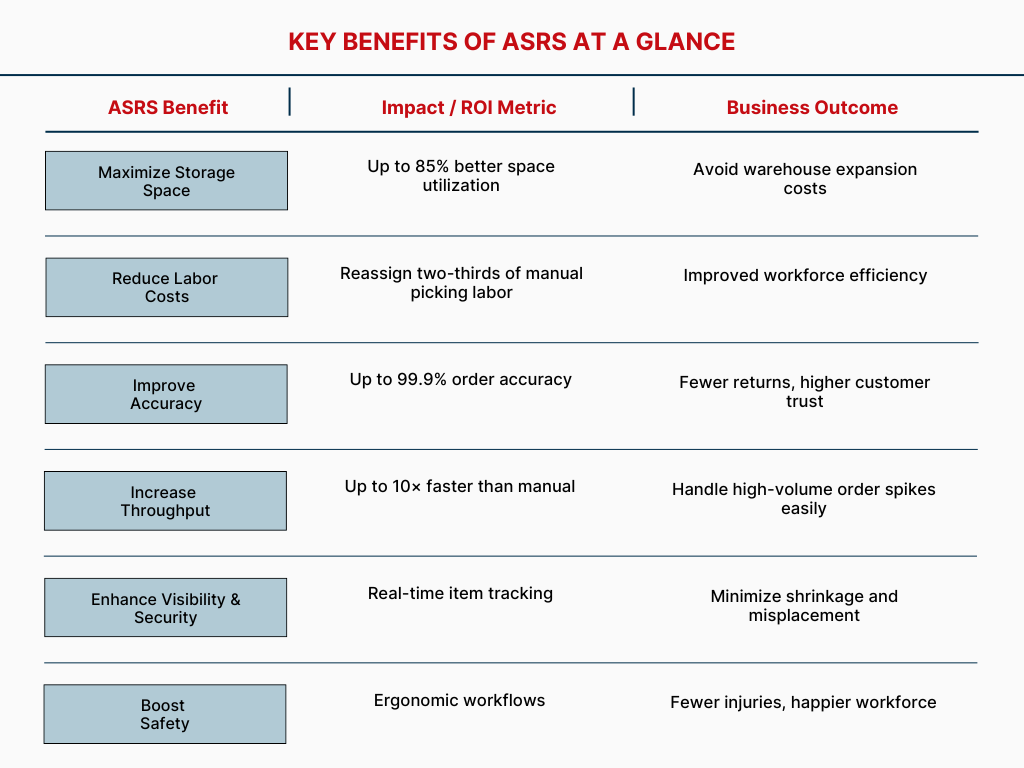
If you’re running out of space or struggling with manual picking inefficiencies, Automated Storage and Retrieval Systems (ASRS) offer a powerful solution.
ASRS uses robotic systems to store and retrieve inventory from high-density, vertically oriented storage systems. When integrated with a WMS, ASRS becomes a critical part of a highly efficient, future-ready operation.
Software Automation: Bridging ERP, WMS, and TMS for End-to-End Efficiency
While physical automation like robotics and ASRS systems revolutionize warehouse floors, software automation plays an equally critical role in orchestrating the flow of data and decisions across the supply chain. Integrating ERP (Enterprise Resource Planning), WMS (Warehouse Management System), and TMS (Transportation Management System) through intelligent automation ensures that every part of the operation—from inventory to delivery—is synchronized, accurate, and agile.
Key Benefits of Software Automation Across Systems:
Real-Time Data Synchronization
- Automated data exchange between ERP, WMS, and TMS eliminates manual entry, reduces errors, and ensures that inventory levels, order statuses, and shipment details are always up to date.
Streamlined Order Fulfillment
- Orders received in the ERP can automatically trigger picking tasks in the WMS and generate optimized shipping plans in the TMS—reducing lead times and improving customer satisfaction.
Automated Exception Handling
- Intelligent workflows can detect anomalies (e.g., stockouts, delayed shipments) and trigger alerts or corrective actions without human intervention.
Improved Planning and Forecasting
- With integrated systems, businesses gain a holistic view of operations, enabling better demand forecasting, labor planning, and resource allocation.
Faster Decision-Making with Unified Dashboards
- Centralized control towers provide visibility across systems, allowing managers to monitor KPIs, track SLAs, and make data-driven decisions in real time.
Scalable and Modular Architecture
- Cloud-based platforms and APIs allow plug-and-play integration, making it easier to scale operations or onboard new partners without disrupting existing workflows.
A typical use case would be that a customer order is placed in the ERP system automatically:
- Updates inventory levels in the WMS.
- Triggers a pick-pack-ship workflow.
- Send shipment details to the TMS for carrier selection and route optimization.
- Updates the ERP with delivery status and tracking information—completing the loop.
Frameworks like AiTesta are leading this charge, enabling smarter inventory tracking and scalable operations.
Making a Business Case for Automation
Warehouse automation isn’t just a tech upgrade—it’s a business accelerator.
Tangible Returns on implementing automation strategies include:
- Up to 70% Labor Cost Reduction
- Avoid Costly Expansions with Space Optimization
- Fewer Errors = Less Rework & Returns
- Faster Fulfillment = Happier Customers
Improved Loyalty Through On-Time, Accurate Deliveries
Most businesses see a payback period of under 3 years, with an average IRR of 14.36%.
Scale Smart and Grow Without Disruption
One of the biggest advantages of modern warehouse automation? Scalability.
With cloud-based WMS platforms and modular automation systems, you can start small and scale fast without disrupting your operations or requiring a full system overhaul.
This flexibility makes it easy to adapt to:
- Peak seasons and fluctuating demand
- New product lines and fulfilment channels
- Business growth and expansion into new markets
The Future-Ready Warehouse Starts Now
The global automated warehouse market is projected to grow from $26.5 billion in 2024 to over $115.8 billion by 2034. That’s a clear signal that warehouse automation isn’t a passing trend, but the future of logistics.
Whether you’re a fast-scaling eCommerce brand, a manufacturer navigating tight margins, or a 3PL juggling multiple clients, embracing automation is how you build a smarter, more adaptable, and more profitable warehouse.
So, if you’re wondering when to start automating your warehouse, the answer is simple:
Now is the time.